Preparing for a Fall Move: Why Starting Early Makes All the Difference

A fall move can offer several advantages. Cooler temperatures may make packing and moving more comfortable, summer commitments are winding down, and the change of seasons can provide a natural opportunity for a fresh start. However, moving during the fall also presents distinct challenges, including shorter days, unpredictable weather, school schedules, and approaching holiday obligations.
Whether you are moving across town or several states away, beginning the planning process early can significantly reduce stress and improve the overall experience. A successful move requires more than packing boxes. It involves evaluating belongings, coordinating services, managing schedules, preparing the new home, and addressing the needs of every family member.
The earlier these responsibilities are identified, the more manageable they become.
Early Planning Supports Better Decisions
One of the most common moving mistakes is waiting until the final weeks to begin sorting and packing. When time is limited, people tend to place everything into boxes and postpone decisions until after the move.
Although this approach may appear efficient, it often transfers unnecessary belongings—and unresolved clutter—to the new home. Boxes intended to be sorted later may remain unopened in a basement, garage, attic, or spare room for months or even years.
Beginning early allows you to evaluate your possessions carefully. Instead of attempting to declutter an entire home during one exhausting weekend, work through one manageable area at a time. A bathroom cabinet, linen closet, kitchen drawer, or coat closet can provide a practical starting point.
As you review each item, consider the following questions:
Do we use or need this item?
Will it fit physically and functionally in the new home?
Is it worth the expense and effort required to move it?
Could another person benefit from it?
Does it support the way we intend to live in our new space?
Answering these questions well before moving day allows decisions to be based on usefulness, available space, and future needs rather than time pressure.
Develop a Moving Calendar
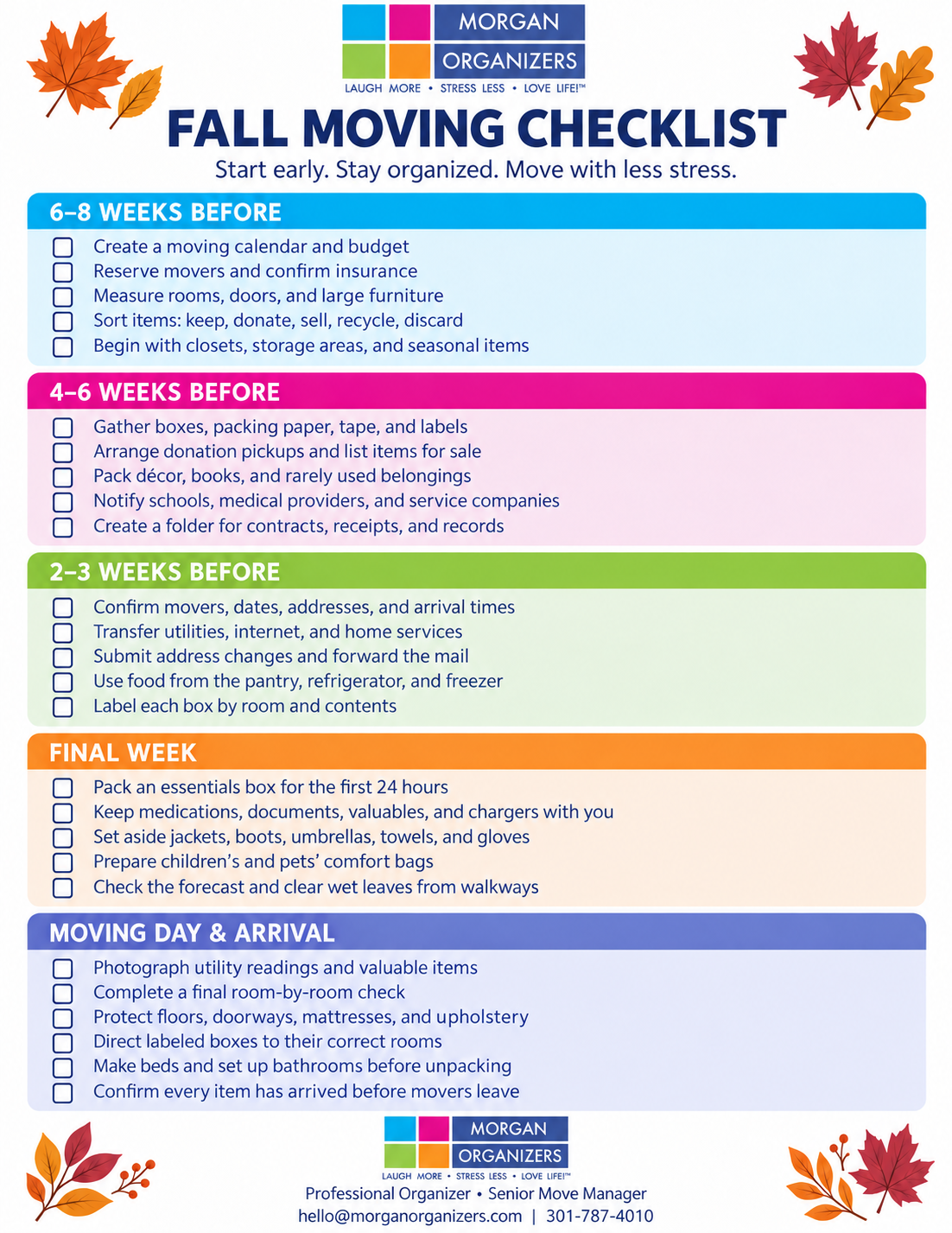
A moving calendar converts a large, complicated project into a series of specific and manageable tasks. It also establishes clear deadlines and helps family members understand their responsibilities.

Approximately six weeks before the move, begin by measuring rooms, doorways, hallways, and staircases in the new home. Compare these measurements with the dimensions of your larger furniture. This step can prevent the time and expense of moving items that will not fit or function well in the new space.
Five weeks before the move, begin sorting storage areas and identifying items to donate, sell, recycle, discard, or give to family members. Four weeks before the move, gather packing materials and begin packing seasonal decorations, books, collectibles, extra linens, and other items that are not needed regularly.
Three weeks before moving day, confirm arrangements with the moving company and begin notifying schools, utility companies, financial institutions, insurance providers, medical offices, and other service providers. Continue packing in stages so that only everyday necessities remain during the final week.
A detailed calendar also makes it easier to divide responsibilities. Younger children can sort books or toys with adult guidance. Teenagers can pack personal belongings and update address information. One adult may coordinate utilities and service providers while another manages donations, sales, and communication with the moving company.
Clear responsibilities reduce duplication, prevent misunderstandings, and make important tasks less likely to be overlooked.
Sort Before You Pack

Packing is more efficient when decisions are made first. Establish clear categories for belongings you plan to keep, donate, sell, recycle, discard, or give to a specific person.
Avoid creating a large “decide later” category. A small number of uncertain items is understandable, but multiple boxes of undecided belongings only postpone the work and create additional clutter in the new home.
If you intend to sell furniture or household items, list them early. Locating buyers, responding to messages, and scheduling pickups may take longer than expected. Donation organizations may have restrictions on the items they accept, particularly upholstered furniture, mattresses, and large appliances. Some organizations also require donation pickups to be scheduled well in advance.
Recycling centers and disposal services may have separate requirements for electronics, hazardous household materials, construction debris, and oversized items. Investigating these options early provides time to handle unwanted belongings appropriately.
Reducing the amount you move may also lower moving expenses, particularly when charges are based on shipment weight, volume, labor, or the number of vehicles required. Fewer belongings also mean fewer items to pack, load, transport, unload, unpack, and organize.
Prepare for Seasonal Conditions
Fall weather can change quickly. A moving day that begins with mild temperatures may bring rain, strong winds, falling temperatures, or even early snow.
Keep seasonal necessities readily accessible. Jackets, boots, gloves, umbrellas, towels, and extra clothing should travel with you rather than being placed in the moving truck. Protect mattresses, upholstered furniture, artwork, and other moisture-sensitive items with appropriate coverings. Sturdy plastic containers may offer added protection for belongings that could be exposed during loading and unloading.
Shorter daylight hours should also be considered. Whenever possible, schedule outdoor loading and unloading during daylight. Confirm that exterior lighting works at both homes and remove leaves, branches, and other debris from walkways. Wet leaves and poorly illuminated steps can create safety hazards for family members and movers.
Monitor the forecast as moving day approaches and develop a backup plan for severe weather. Having protective supplies, towels, floor coverings, and appropriate clothing available can help the move continue safely and efficiently.
Plan for Children and Pets
Moving can be physically and emotionally demanding for children and pets. Maintaining familiar routines whenever possible can provide stability during the transition.

Prepare an individual essentials bag for each family member. Include medications, toiletries, snacks, water, chargers, school supplies, sleepwear, extra clothing, and comfort items. Children may benefit from keeping a favorite blanket, stuffed animal, book, or activity nearby.
Pets should have accessible food, water, medications, leashes, carriers, bedding, and veterinary records. When possible, arrange for children and pets to remain with a trusted friend, family member, or caregiver during the busiest portions of moving day. This can reduce stress while keeping them safely away from open doors, heavy furniture, vehicles, and unfamiliar people.
Prepare the New Home in Advance
Effective moving preparation should address both the home you are leaving and the home you are entering.
If possible, clean the new residence before the moving truck arrives. Confirm that electricity, water, heating, and internet services will be available. Inspect exterior lighting, locks, smoke detectors, and carbon monoxide detectors. If repairs, painting, or flooring work are needed, completing those projects before furniture arrives can save considerable time and effort.
Determine where larger pieces of furniture should be placed and provide movers with a simple room plan. Clearly label each box with its destination room and a brief description of its contents. Labels such as “Kitchen—Everyday Dishes” or “Primary Bedroom—Bedding” are more useful than general descriptions.

Prepare an “open first” box containing essential kitchen supplies, toilet paper, soap, towels, bedding, cleaning products, basic tools, coffee, and breakfast items. Important documents, medications, jewelry, financial records, and irreplaceable personal belongings should remain with you rather than traveling in the moving truck.
The goal is not merely to move belongings into the house. It is to make the new home safe, functional, and comfortable as efficiently as possible.
Allow Time for Unexpected Changes
Even a carefully planned move may encounter unexpected complications. A closing date may change, a moving company may adjust its arrival time, severe weather may develop, or a large piece of furniture may not fit through a doorway. Illness, vehicle problems, or service delays can also disrupt the schedule.
Beginning early creates a valuable margin of time for responding to these circumstances. When most sorting, packing, and scheduling tasks have already been completed, an unexpected development can be managed as an adjustment rather than a crisis.
This flexibility is one of the most important benefits of early planning. It reduces last-minute pressure and allows decisions to be made carefully, even when circumstances change.
Begin Your Move With a Clear Plan

Starting early will not eliminate every challenge associated with moving. It will, however, provide the time and structure needed to manage those challenges effectively.
A thoughtful moving plan allows you to decide what belongs in your new home, coordinate responsibilities, prepare for seasonal conditions, and establish essential household functions before moving day. It can also help your family arrive with fewer unnecessary possessions and a clearer vision for how the new space will be used.
If you are preparing for a fall move, begin before the pressure builds. Review your calendar, choose one manageable area, and take the first step.
MORGAN ORGANIZERS assists individuals and families with sorting, decluttering, downsizing, packing, unpacking, move coordination, and organizing a new home. With professional support and a well-structured plan, your move can become a carefully managed transition into the next chapter of your life.