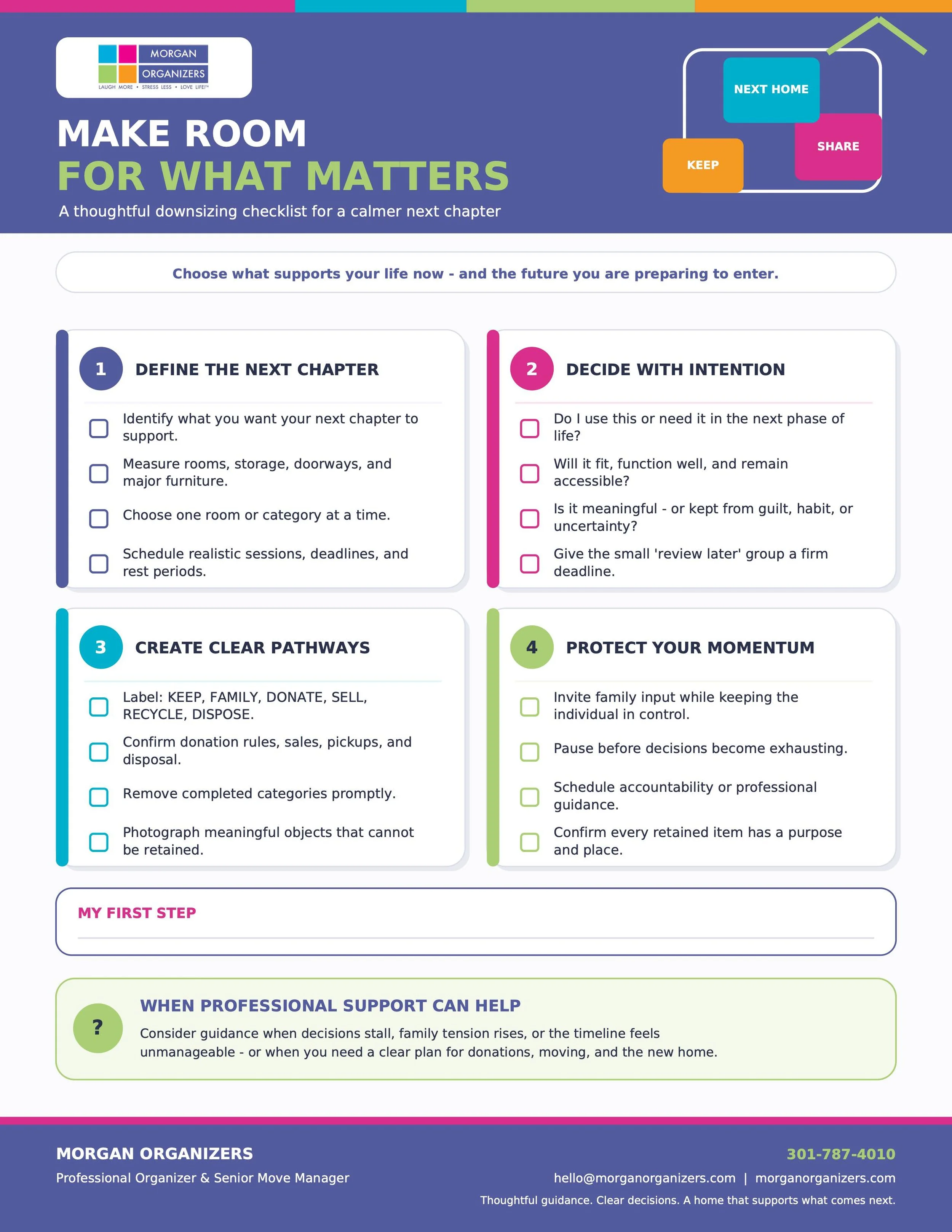
Home is more than a place to live. It holds memories, routines, relationships, and a sense of identity. A familiar home may represent years of family life, celebrations, personal accomplishments, and everyday moments that cannot be measured in square footage.
For many senior adults, the possibility of leaving their home can feel unsettling. Even beginning the conversation may seem as though a decision has already been made. However, exploring housing options does not mean that a move is inevitable. It simply means taking the time to consider whether the current home continues to support safety, comfort, independence, financial priorities, and the lifestyle a person wants to maintain.

The decision is not simply between staying and moving. It is about choosing the environment that best supports the next chapter of life.
When Aging in the Current Home Works Well
Remaining in a familiar home can be a positive choice when the property continues to meet a person’s needs. The home may be located near family, friends, healthcare providers, shopping, and other important resources. The individual may have a strong neighborhood support system and feel comfortable managing the home’s daily responsibilities.
In some situations, relatively modest changes can make a home safer and easier to navigate. These may include:
Installing grab bars and improved lighting
Adding handrails or a stair lift
Removing tripping hazards
Relocating frequently used items
Creating a main-floor bedroom or bathroom
Hiring help for cleaning, landscaping, or maintenance
Arranging transportation or grocery delivery
Establishing emergency and communication systems
Aging in the current home does not require doing everything independently. An effective plan may include family assistance, professional services, accessibility improvements, and reliable community resources.
The important question is not whether someone can remain in the home exactly as it is today. The question is whether the home and available support can adapt as needs change.
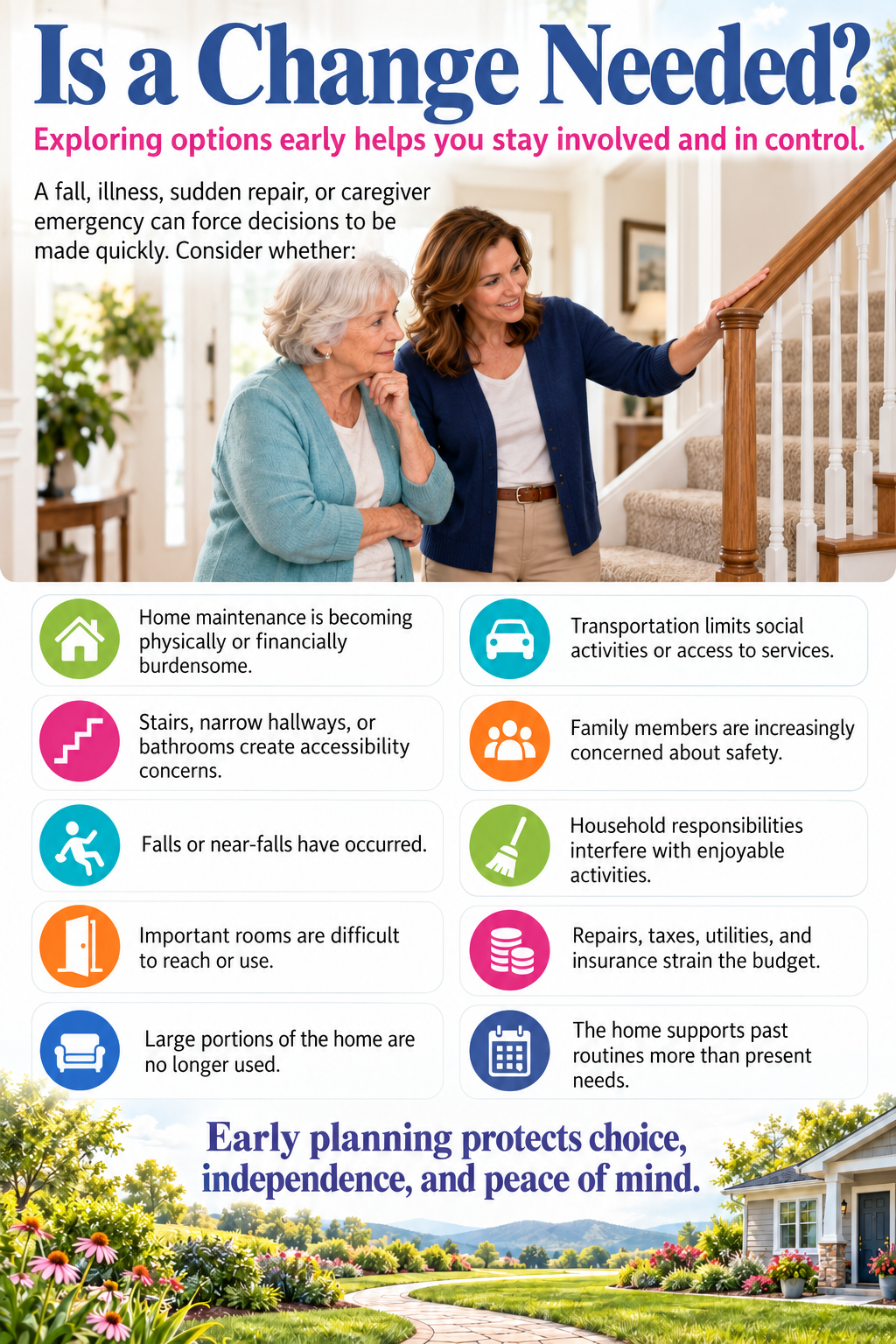
Recognizing When the Home May Not Be the Best Fit
A home that worked well for decades may gradually become difficult to maintain. These changes often happen slowly, making them easy to overlook or accommodate one at a time.
The stairs may become tiring. Yardwork may take longer. Rooms that were once filled with family activity may now remain unused. Repairs may accumulate because coordinating contractors feels overwhelming. Transportation may become more difficult, particularly if the home is located far from medical care, shopping, or social activities.
No single inconvenience necessarily means that it is time to move. However, several ongoing concerns may indicate that it is appropriate to explore alternatives.
Consider whether:
Routine home maintenance is becoming physically or financially burdensome.
Stairs, narrow hallways, or bathrooms create accessibility concerns.
Falls or near-falls have occurred.
Important rooms are difficult to reach or use.
Large portions of the home are no longer used.
The property feels isolating because transportation or social opportunities are limited.
Family members are increasingly concerned about safety.
Household responsibilities interfere with enjoyable activities.
Repairs, taxes, utilities, and insurance are placing pressure on the budget.
The home supports past routines more than present needs.
The goal is not to wait for a crisis. A fall, illness, sudden repair, or caregiver emergency can force decisions to be made quickly. Exploring options before an urgent situation develops allows the individual to remain involved and in control.
Focus on Daily Life, Not Just the House
Housing decisions often become centered on the property itself: the number of bedrooms, the size of the yard, the value of the home, or the years spent living there. Those considerations matter, but the quality of daily life matters just as much.
Think about an ordinary week.
Is it easy to prepare meals, do laundry, retrieve the mail, and move from room to room? Are there opportunities to see friends and family? Is transportation dependable? Does maintaining the home leave enough time and energy for hobbies, travel, community involvement, or rest?
A home should support the life being lived now. If most of a person’s energy is being used to manage the property, a smaller or more accessible home may provide greater freedom.
Downsizing is not necessarily about giving something up. It can mean exchanging unused space and demanding responsibilities for convenience, connection, and more time to enjoy meaningful activities.
Explore a Range of Possibilities

There are many options between remaining in the current home without changes and moving immediately into a senior living community.
A person might modify the existing home, hire additional household help, move to a smaller home in the same community, relocate closer to family, choose a condominium with exterior maintenance included, or consider an independent living community with services and social opportunities.
Other possibilities may include:
A one-level home
A smaller apartment
A townhome or condominium
An accessory dwelling near family
A continuing care community
Independent living
Assisted living
A home in a walkable neighborhood
A residence closer to healthcare and transportation
Exploring these options does not require making an immediate commitment. Visiting communities, touring homes, comparing expenses, and discussing future needs can provide useful information.
A person may ultimately decide to remain in the current home. That decision will be stronger when it is based on careful evaluation rather than fear of change.
Compare the Full Cost of Staying and Moving
Financial comparisons should include more than a mortgage or monthly rent. The actual cost of remaining in a home may include property taxes, insurance, utilities, repairs, lawn care, snow removal, cleaning, transportation, and accessibility modifications.
Moving also involves expenses, including preparing the home for sale, professional services, packing, movers, deposits, new furnishings, and possible community fees.
Create a realistic comparison of both choices. Consider current costs as well as expenses that may arise over the next several years. A large repair, a new roof, increased maintenance assistance, or home modifications can significantly affect the financial picture.
The least expensive option on paper may not always provide the best overall value. Safety, access to support, transportation, social opportunities, and reduced stress should also be considered.
Begin the Conversation Before a Crisis
Housing conversations are most productive when they begin with listening.
Family members may be tempted to focus immediately on safety concerns or present a list of reasons why a move is necessary. Although these concerns may be valid, approaching the conversation this way can make the senior adult feel that control is being taken away.
Begin with questions:
What do you value most about your current home?
Which household responsibilities are becoming more difficult?
What would make daily life easier?
What concerns you most about moving?
Where would you like to be closer to family, friends, or services?
What would an ideal next home provide?
What belongings and traditions are most important to preserve?
These questions keep the conversation centered on the individual’s priorities. They also help separate concerns about the physical move from concerns about losing familiarity, independence, memories, or identity.
Several short conversations are often more productive than one intense discussion. Allow time for reflection, additional questions, and changing feelings.
Make Downsizing a Gradual Process

Downsizing does not need to begin after a new home has been selected. It can start with small decisions that improve the current home while preparing for future possibilities.
Begin with areas that contain fewer emotional items, such as a bathroom cabinet, laundry room, linen closet, or pantry. Remove expired products, duplicates, and belongings that are no longer used.
As the process continues, establish clear categories:
Keep
Give to family or friends
Donate
Sell
Recycle
Discard
Review later
Avoid creating an unlimited “review later” category. A small number of uncertain items is reasonable, but multiple boxes of postponed decisions can recreate the same burden in a new home.
Meaningful belongings deserve time and respect. Family photographs, heirlooms, letters, and collections should not be treated as ordinary household clutter. These items may be shared with family, photographed, digitized, displayed differently, or represented by one carefully chosen piece.
The purpose is not to remove everything. It is to identify what genuinely deserves a place in the next chapter.
Seek Support Throughout the Decision
A housing transition involves practical, financial, and emotional decisions. Support may come from family members, healthcare providers, financial advisors, real estate professionals, contractors, senior living specialists, professional organizers, and senior move managers.
A neutral professional can be especially helpful when family members have different opinions or when the process feels overwhelming. MORGAN ORGANIZERS can help organize priorities, evaluate the current home, develop a realistic timeline, sort belongings, coordinate donations and sales, prepare for a move, and create functional systems in the new residence.
Support should preserve the individual’s voice. The purpose is not to make decisions for someone. It is to provide the information, structure, and assistance needed to make decisions with greater confidence.
Moving Forward With Confidence
There is no single housing choice that is right for every senior adult. For some, remaining in a familiar home with thoughtful modifications and reliable services offers comfort and independence. For others, moving to a smaller or more supportive home reduces responsibilities and creates new opportunities.
The best decision is one made before circumstances become urgent, with a clear understanding of current needs, future possibilities, available resources, and personal priorities.
Exploring options does not take away independence. It strengthens it.
MORGAN ORGANIZERS helps individuals and families evaluate their needs, organize decisions, declutter thoughtfully, plan transitions, coordinate moves, and create welcoming new spaces. With calm conversations, practical information, and professional support, choosing where to live next can become a positive and empowering step toward a home that continues to support a meaningful life.