Leaving military service is often described as a transition, but that word can make the process sound like one clearly defined event. A service member completes her final assignment, receives her separation documents, and begins civilian life. In reality, the change rarely happens that neatly.
The transition into civilian life is not a single event. It is a series of practical decisions and adjustments.
A woman may be preparing to move while applying for benefits, looking for work, reviewing household finances, scheduling medical appointments, and trying to establish a new daily routine. She may be moving closer to family, beginning college, supporting children, caring for a parent, managing a service-related condition, or deciding whether her next career should resemble her military work at all.
There are organizations that help veterans with employment, healthcare, education, benefits, and counseling. Those resources are important. Yet many women also need practical support at home. They need help locating documents, preparing for a move, setting up a workspace, organizing expenses, coordinating appointments, and developing systems that make everyday life more manageable.
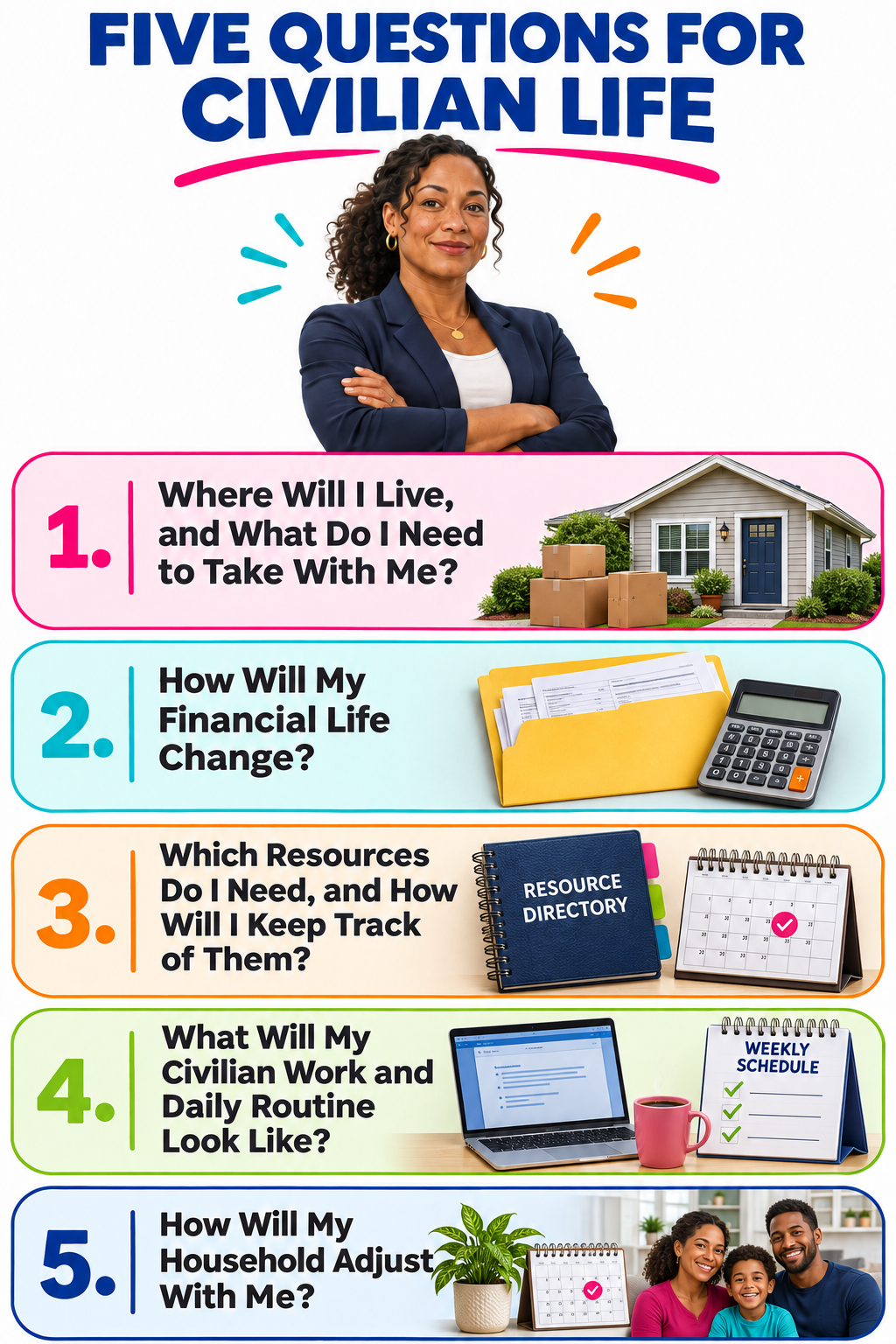
The transition becomes easier to approach when it is considered through five significant questions.
1. Where Will I Live, and What Do I Need to Take With Me?
Housing and relocation are among the most immediate concerns for many women leaving military service. A woman may be leaving military housing, returning to her hometown, moving near family, relocating for employment, or choosing a community based on healthcare and educational opportunities.

The decision involves more than selecting a destination. She must also determine what she owns, what should be moved, what no longer supports her life, and how much the move will cost.
Frequent military moves may have produced boxes that were transported from one duty station to another without being opened. Those boxes may contain old paperwork, clothing, household items, equipment, photographs, or belongings that were packed quickly during an earlier relocation. During separation, they become part of a much larger decision: What belongs in the next chapter?
The practical solution is to begin sorting before packing. Each room can be addressed separately so the process does not become overwhelming. Items can be kept, donated, sold, recycled, discarded, given to family members, or placed in a clearly labeled “review later” category.
Military uniforms, awards, insignia, records, photographs, and memorabilia should be handled separately from ordinary household items. Some items may need to be returned or disposed of according to established requirements. Others may deserve archival storage or a designated display area. Emotionally significant belongings do not require immediate decisions. They can be protected and reviewed after the move, when the transition feels less urgent.
A moving plan should also include an essentials box that remains accessible. Identification, medications, chargers, benefit documents, basic clothing, toiletries, children’s items, pet supplies, and anything needed during the first few days should not be buried in a moving truck.
MORGAN ORGANIZERS can help with what to do before the move and how to coordinate donations, organize documents, label boxes, prepare essential items, and establish the new home after arrival. The goal is not simply to transport belongings. It is to help create a home that supports civilian life.
2. How Will My Financial Life Change?
Military service may provide predictable pay dates, housing support, healthcare arrangements, allowances, and access to established financial systems. Civilian life can introduce different pay schedules, insurance costs, commuting expenses, childcare needs, housing payments, education costs, and periods of uncertain income.
Even when a woman has carefully planned for separation, the first civilian budget may look very different from the military household budget.
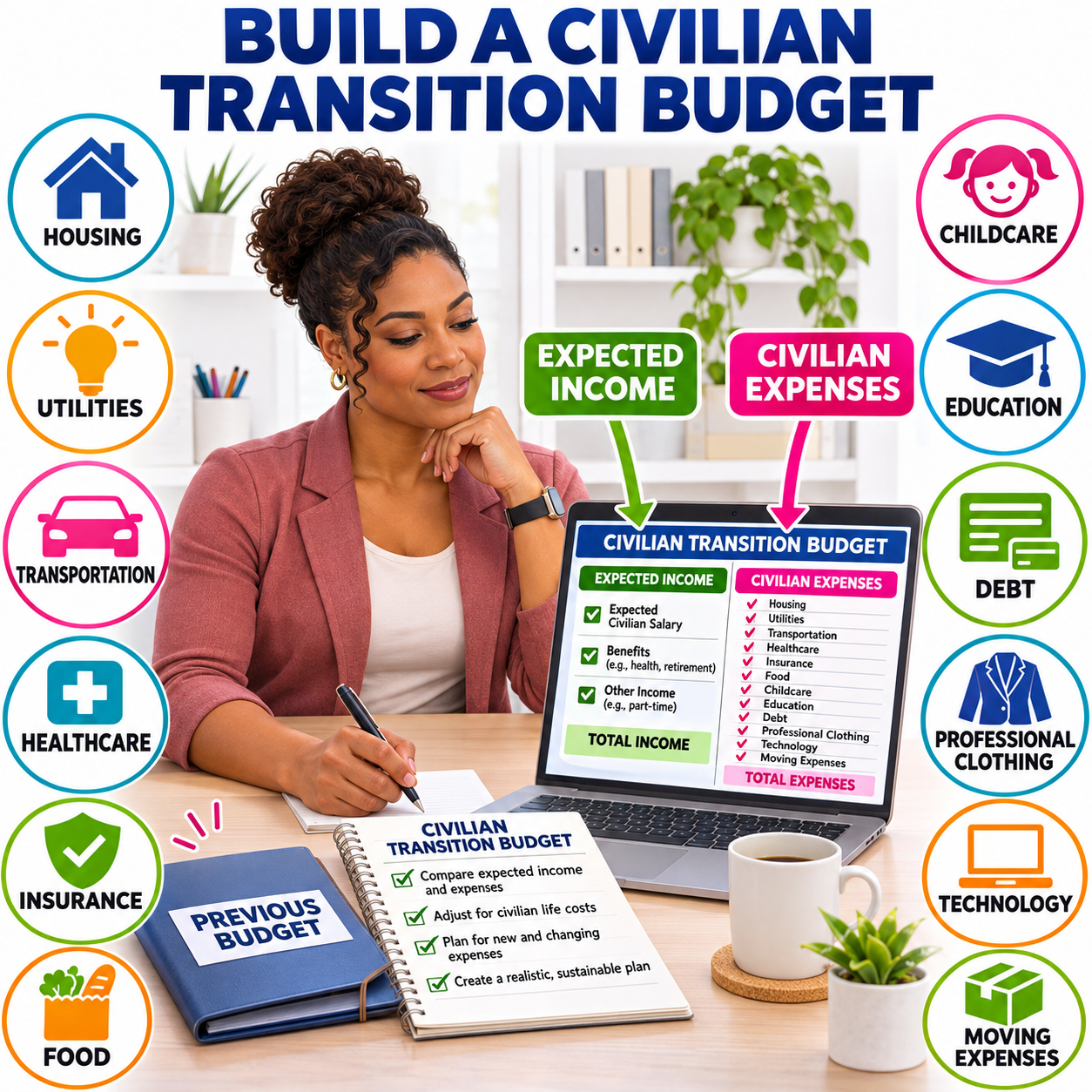
The practical solution begins with a clear picture of what is changing. Instead of relying on the previous budget, she can create a transition budget based on expected civilian income and expenses. This should account for housing, utilities, transportation, healthcare, insurance, food, childcare, education, debt, professional clothing, technology, and moving expenses.
It is helpful to separate recurring expenses from one-time transition costs. A résumé service, certification fee, security deposit, moving truck, laptop, or interview outfit may be necessary, but it should not be mistaken for a permanent monthly expense.
Financial paperwork also needs a reliable home. Benefit letters, insurance information, bank records, education funding documents, tax information, moving receipts, and employment records should not remain scattered across kitchen counters and email accounts. A labeled filing system makes it easier to prepare for appointments and monitor deadlines.
The system should also include an action section. Documents requiring a signature, payment, telephone call, submission, or follow-up belong together. Once the action is complete, the document can be moved into its permanent category.
MORGAN ORGANIZERS does not provide financial planning or benefits advice. We can, however, provide guidance on how to organize the records a woman needs when meeting with a financial professional, veteran service officer, employer, school representative, or benefits counselor. When the necessary information is easy to find, financial conversations become more productive and less stressful.
3. Which Resources Do I Need, and How Will I Keep Track of Them?
Women veterans may receive information from numerous sources. Military transition personnel, the Department of Veterans Affairs, state and county veterans service offices, healthcare providers, educational institutions, workforce agencies, nonprofit organizations, and community groups may all offer assistance. The difficulty is often not the absence of resources. It is determining which resources apply, completing the necessary steps, and keeping track of multiple contacts and appointments.
One organization may help with healthcare enrollment. Another may assist with a benefit claim. A workforce agency may provide employment support, while a college veterans office helps with transcripts and education funding. Each may request different records, forms, identification, or follow-up actions.
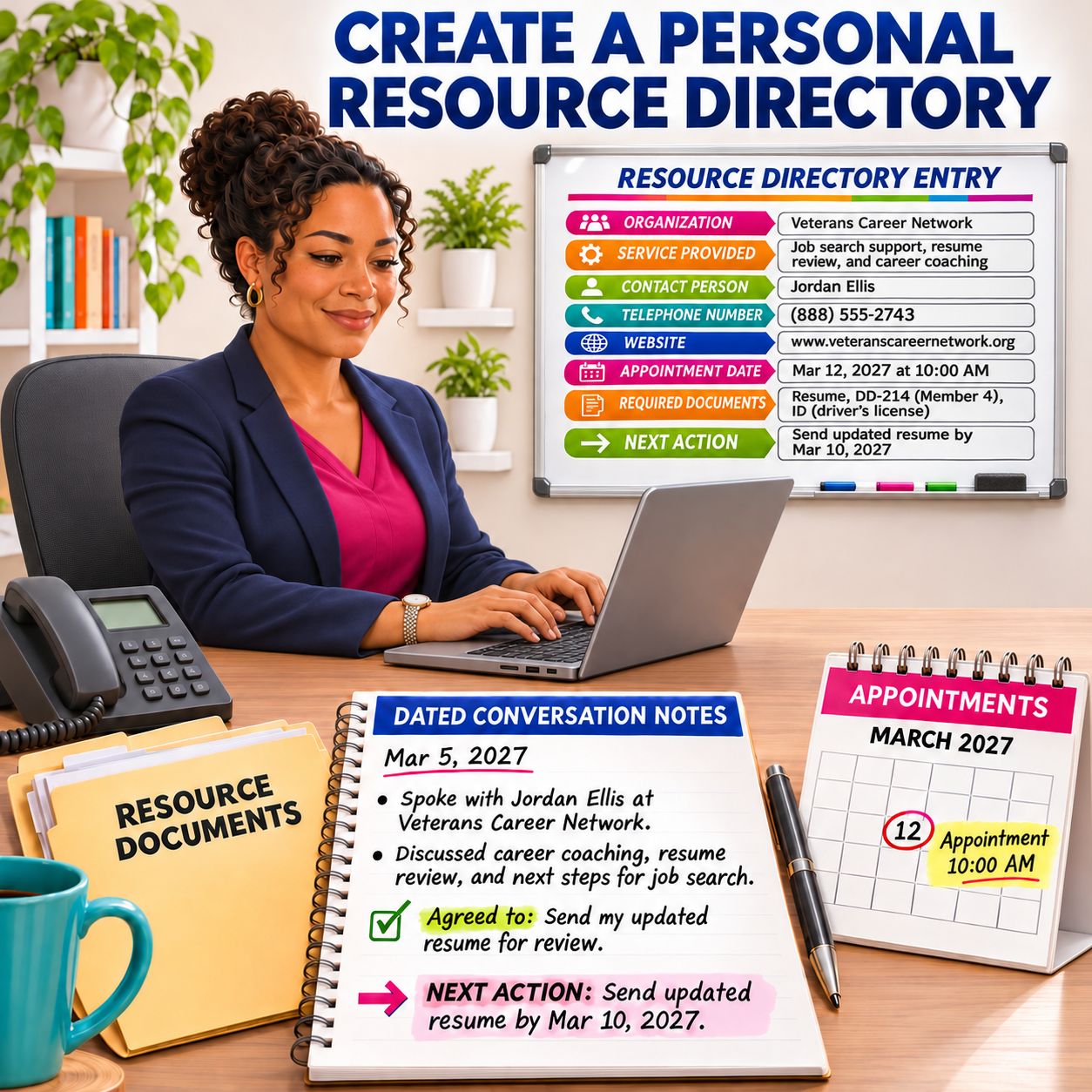
The practical solution is to create a personal resource directory. Each entry should include the organization, service provided, contact person, telephone number, website, appointment date, required documents, and next action. Notes from conversations should be dated so the woman knows what was discussed and what she agreed to do.
A transition calendar can hold appointment dates, application deadlines, expected responses, renewal dates, and follow-up reminders. Relying on memory is risky when many unrelated tasks are occurring at the same time.
Paper and digital information should follow the same basic categories. If healthcare documents are stored in a labeled physical folder, digital healthcare records should have a similarly recognizable electronic folder. Consistency reduces the amount of time spent searching.
MORGAN ORGANIZERS can help with organizing a system to keep this information together. Our role is to make the resource easier to use after it has been found.
4. What Will My Civilian Work and Daily Routine Look Like?
Military life generally provides defined responsibilities, schedules, reporting structures, clothing expectations, and standards. Civilian employment may be far less predictable. Job searching itself can feel like a full-time responsibility without a clear schedule. A woman may be writing résumés, attending appointments, applying for positions, completing training, caring for children, and managing the household at the same time. Without a routine, every task can feel urgent.
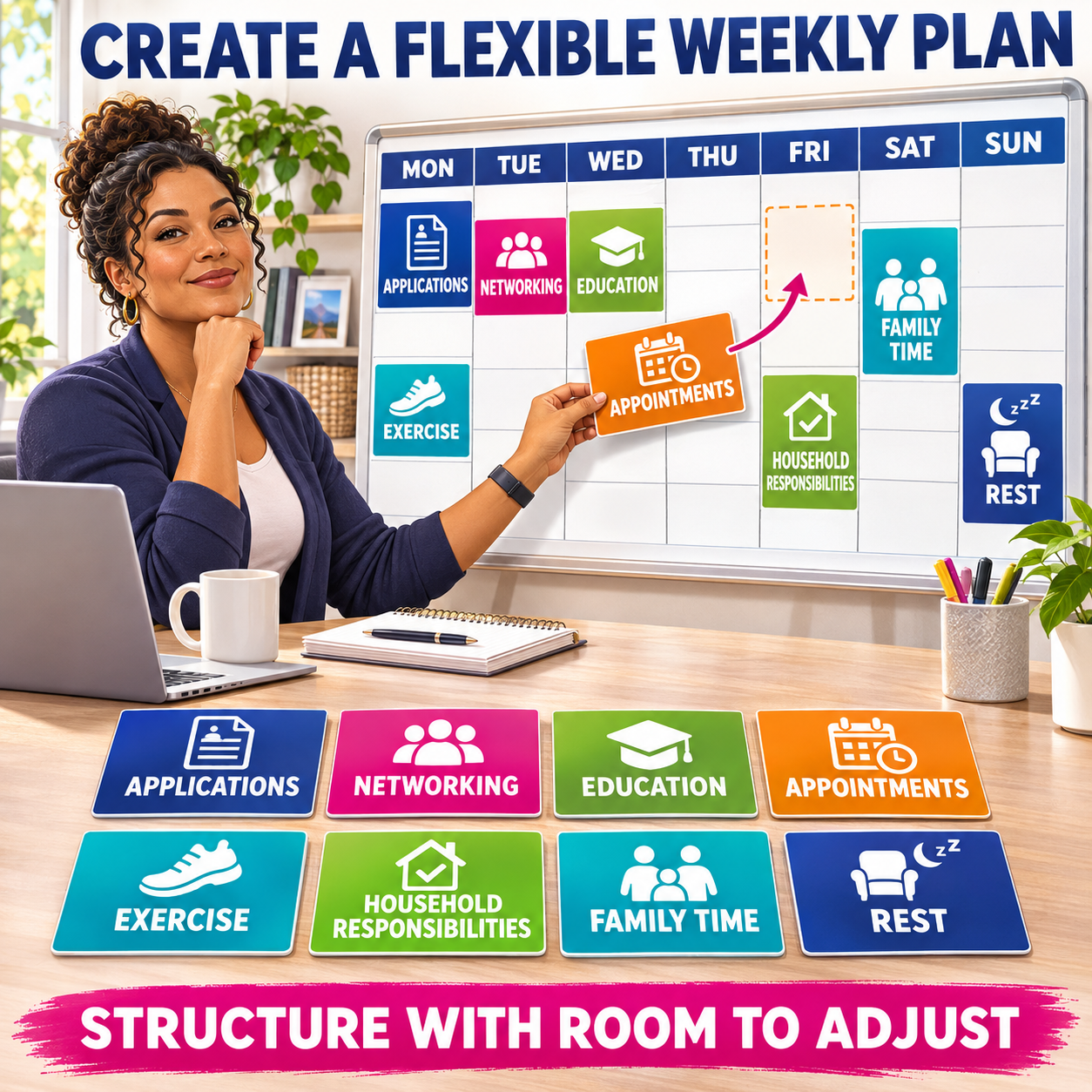
The practical solution is to create structure without making the civilian schedule unnecessarily rigid. A weekly plan can include dedicated periods for applications, networking, education, appointments, exercise, household responsibilities, family time, and rest.
Career materials also need an organized system. A master résumé, targeted résumés, cover letters, references, transcripts, certifications, interview notes, and job descriptions should be stored together. Applications can be tracked by employer, position, submission date, contact person, interview date, follow-up date, and current status.
A functional workspace can make this process easier. It does not need to occupy an entire room. A small desk, part of a bedroom, or a portable work cart may be enough. The important features are reliable technology, adequate lighting, essential supplies, secure document storage, a professional background for virtual interviews, and limited distractions.
MORGAN ORGANIZERS can provide guidance for establishing an organized workspace.
5. How Will My Household Adjust With Me?
A military separation affects more than the person whose service is ending. Family routines may also change. Childcare, transportation, meals, school schedules, household responsibilities, medical appointments, and caregiving arrangements may need to be reconsidered.

A woman may be physically present at home more often while still carrying a demanding schedule of appointments, applications, classes, or medical care. Family members may assume that her increased presence means she is available to manage every household responsibility. Without a clear conversation, the new arrangement can create frustration.
The practical solution is to make responsibilities visible. A shared calendar can show interviews, appointments, classes, school events, work schedules, and transportation needs. A weekly household meeting can identify what is happening and who will handle each responsibility.
Simple home systems can reduce daily stress. A designated area near the entrance can hold keys, bags, identification, mail, and items that need to leave the house. A meal plan can reduce evening decisions. A weekly paperwork review can prevent important notices from being overlooked. An evening reset can prepare clothing, supplies, and schedules for the next day.
These systems do not need to be complicated. They need to reflect the household’s current reality.
MORGAN ORGANIZERS can help establish shared calendars, organize family paperwork, create functional entry areas, set up meal-planning systems, and prepare spaces for work or study. The woman veteran remains in control of each decision. MORGAN ORGANIZERS provides practical assistance in putting those decisions into practice.
One Decision at a Time
There is no single date on which military life ends and civilian life feels completely established. The transition unfolds through many ordinary decisions: where to place an important document, what to pack, which appointment to schedule, how to adjust the budget, when to follow up, where to work, and who will manage a household responsibility.
Those decisions may appear small, but together they shape the next chapter.
MORGAN ORGANIZERS can help with setting up systems to:

organize the documents needed for an appointment.
set up systems for sorting the belongings involved in a move.
prepare a workspace for a job search or class.
organize new financial records.
establish household routines that match a changing schedule.
The transition into civilian life is not a single event. It is a series of practical decisions and adjustments. Those decisions become easier to manage when a woman has organized information, supportive spaces, workable routines, and a clear next step.
Resources
Department of Veterans Affairs (VA) Resources
Center for Women Veterans: Established by Congress to improve access to VA benefits, services, and programs. Visit the Center for Women Veterans for updates and application guides.
Women Veterans Call Center: Call or text 1-855-829-6636 to speak (often with a female veteran) about health care enrollment, benefits, and local eligibility.
Women Veteran Program Manager (WVPM): Every VA medical center has a designated WVPM to coordinate specialized care and connect you with local services. https://www.womenshealth.va.gov/wvpm-locator.asp
Advocacy & Support Organizations
National Women Veterans United: Offers peer support, advocacy, and community resources for women who have served. https://nwvu.org/
Women Veterans Alliance: A global network providing career guidance, mentoring, and events. You can explore programs via the Women Veterans Alliance.
Service Women's Action Network (SWAN): Advocates for the individual and collective needs of servicewomen and women veterans. https://www.servicewomensactionnetwork.org/
Foundation for Women Warriors: Provides emergency financial assistance, childcare stipends, and housing stability support in select states. Find details at the Foundation for Women Warriors. [1]
Crisis & Immediate Help
Women Veterans Call Center: 1-855-829-6636
VA Suicide Prevention Hotline: Call or text 988 (then press 1) or call 1-800-273-8255
National Call Center for Homelessness Among Veterans: 1-877-4AID-VET (1-877-424-3838)