How to Budget for a Senior Move Without Surprises

Moving is more than packing boxes—it is closing one chapter of life and beginning another. For many older adults, a move means saying goodbye to a home filled with years of memories, treasured keepsakes, and familiar routines. It often involves difficult decisions about what to keep, what to share with family, and how to create a comfortable new home in a smaller space or a senior living community. At the same time, family members are often balancing work, caregiving, and the many details that come with preparing a home for sale, coordinating movers, and helping a loved one through an emotional transition. With so many moving parts, it is easy for unexpected expenses to arise.
The encouraging news is that a senior move can be a positive, well-organized experience with the right planning and support. Creating a realistic budget, understanding the costs involved, and working with experienced professionals can help eliminate financial surprises and make the process feel far less overwhelming. Instead of focusing on the stress of moving, families can spend more time supporting one another and looking forward to the opportunities that await in a new home.
Start with the Full Scope of the Move

The first step in budgeting for a senior move is to understand what the move actually includes. A senior move is rarely just the cost of a moving truck. It may include sorting, packing, floor planning, donation drop-offs, junk removal, storage, estate sale services, cleaning, repairs, real estate preparation, utility changes, and setup in the new home.
Before calling movers or scheduling services, make a written list of everything that needs to happen. Walk through the current home room by room and note the major tasks. Are there closets, attics, basements, garages, sheds, or storage units that need to be cleared? Will furniture need to be measured to see what fits in the new space? Are there items that need to be shipped to relatives? Will the current home need to be cleaned, painted, repaired, or staged before it is sold?
This full-picture approach helps prevent underestimating the true cost of the move. It also helps families decide which tasks they can handle themselves and which ones are better handled by professionals.
Create Categories for the Budget
A clear budget should be organized into categories. This makes it easier to see where the money is going and where adjustments can be made. Common senior move budget categories include:
Moving company costs: labor, truck, mileage, fuel charges, travel time, packing materials, and insurance coverage.
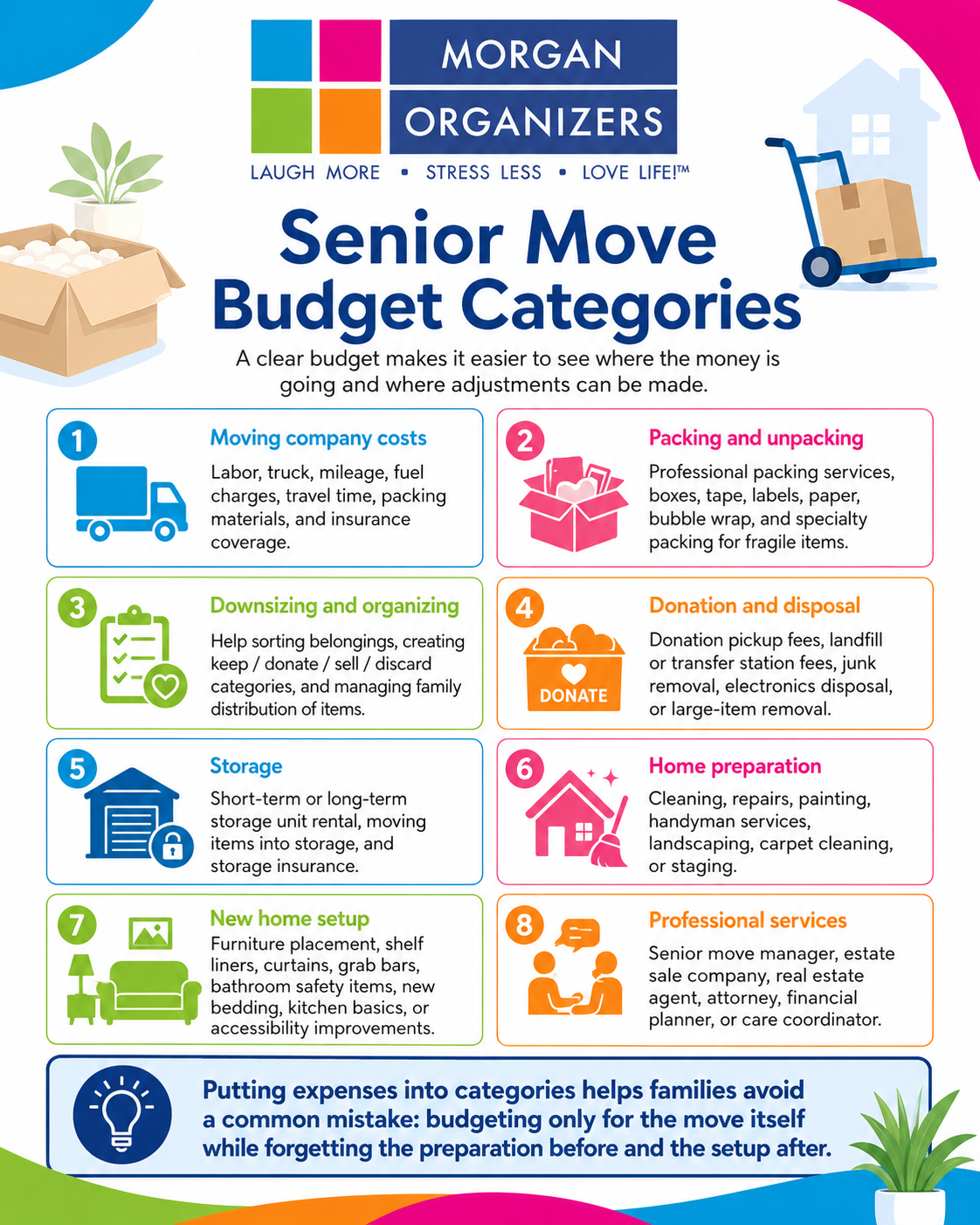
Packing and unpacking: professional packing services, boxes, tape, labels, paper, bubble wrap, and specialty packing for fragile items.
Downsizing and organizing: help sorting belongings, creating keep/donate/sell/discard categories, and managing family distribution of items.
Donation and disposal: donation pickup fees, landfill or transfer station fees, junk removal, electronics disposal, or large-item removal.
Storage: short-term or long-term storage unit rental, moving items into storage, and storage insurance.
Home preparation: cleaning, repairs, painting, handyman services, landscaping, carpet cleaning, or staging.
New home setup: furniture placement, shelf liners, curtains, grab bars, bathroom safety items, new bedding, kitchen basics, or accessibility improvements.
Professional services: senior move manager, estate sale company, real estate agent, attorney, financial planner, or care coordinator.
Putting expenses into categories helps families avoid a common mistake: budgeting only for the move itself while forgetting the preparation before and the setup after.
Get More Than One Estimate
One of the best ways to avoid surprises is to get written estimates from more than one moving company or senior move service. Verbal estimates can be useful for early planning, but they should not be the final basis for a budget. A written estimate should explain what is included, what is not included, and what might create extra charges.
Ask whether the estimate is binding, non-binding, or based on hourly labor. For local moves, companies often charge by the hour and may include a minimum number of hours. For long-distance moves, costs may be based on weight, distance, and delivery schedule. Ask about travel time, stairs, elevators, long carries from the door to the truck, packing materials, fuel surcharges, weekend rates, and cancellation policies.
It is also important to ask what happens if the move takes longer than expected. A senior move may take more time if there are many fragile items, narrow hallways, elevators, or last-minute decisions about what goes and what stays. Understanding these possible added costs ahead of time allows you to build a more realistic budget.
Do Not Underestimate Downsizing Costs
Downsizing can be one of the most time-consuming parts of a senior move. Many families assume they will save money by handling it all themselves, and sometimes they can. However, sorting through a lifetime of belongings takes time, patience, and physical energy. It can also become emotionally difficult when family members disagree about what should be kept, sold, donated, or discarded.

Professional downsizing help can add cost, but it may also save time and reduce stress. A senior move manager, such as MORGAN ORGANIZERS, can help create a plan, sort items, coordinate donations, arrange disposal, and make sure the new home is not overcrowded. This can be especially helpful when family members live far away or when the move must happen quickly.
Even without professional help, downsizing may still involve expenses. Donation centers may not accept everything. Some items may require special disposal. Old paint, chemicals, electronics, mattresses, broken furniture, and large appliances may come with disposal fees. These costs are often overlooked until the final days before the move.
Measure the New Space Before Moving
One costly mistake is moving too much furniture into a smaller home. This can result in extra moving time, crowded rooms, storage fees, or the need to remove items after move-in day. Measuring the new space ahead of time can prevent these problems.
Create a simple floor plan of the new home. Measure rooms, doorways, closets, windows, and hallways. Then measure larger furniture pieces, including beds, dressers, dining tables, recliners, bookshelves, desks, and cabinets. Decide exactly where each piece will go before moving day.
This step helps determine what should be moved, what should be sold or donated, and what may need to be replaced with smaller or safer furniture. It also helps the movers work more efficiently because they can place items correctly the first time.
Plan for Packing Supplies
Packing supplies can become a surprisingly large expense. Boxes, packing paper, tape, labels, markers, mattress bags, wardrobe boxes, dish boxes, and bubble wrap all cost money. Specialty items such as mirrors, artwork, lamps, china, and collectibles may require extra materials.

To reduce costs, begin collecting supplies early. Some moving companies sell used boxes at a discount or allow customers to return boxes after the move. Local stores may provide sturdy boxes, though it is important to choose clean, strong boxes that can handle the weight of household items. Avoid overpacking large boxes with books or dishes because this can lead to breakage or injury.
Labeling supplies are also worth including in the budget. Clear labels save time during unpacking and reduce the risk of important items getting lost. For a senior move, consider labeling boxes by room and priority, such as “Bedroom — Open First” or “Kitchen — Daily Use.”
Build in a Contingency Fund
Even the best-planned move can come with unexpected costs. A home may need an extra cleaning. A moving company may need more time. A piece of furniture may not fit. A storage unit may be needed for a few months. A family member may need to travel. The new home may require additional safety items or repairs.
A practical moving budget should include a contingency fund. A common approach is to add 10 to 20 percent above the estimated total. For example, if the expected cost of the move is $4,000, setting aside an additional $400 to $800 can prevent financial stress if something changes.
This does not mean the extra money will be spent. It simply gives the family breathing room. If the move comes in under budget, the remaining funds can be used for new-home comfort items, medical equipment, future care needs, or savings.
Decide What Family Will Handle
Family help can reduce expenses, but only if expectations are clear. Before the move, decide who will handle specific tasks. One person might manage financial records and service estimates. Another might coordinate donation pickups. Someone else might help with packing family photos or setting up the new kitchen.
Without clear roles, tasks can be duplicated or forgotten. This can lead to last-minute professional service costs that were not in the original budget. A written task list with names and deadlines helps everyone understand what needs to be done.
It is also important to be realistic. Family members may want to help but may not have the time, physical ability, or emotional readiness to manage the entire process. Paying for professional support in key areas may be less expensive than delaying the move, missing deadlines, or making rushed decisions.
Watch for Hidden Costs
Several costs are easy to miss when planning a senior move. These may include utility deposits, mail forwarding, cleaning fees, repair supplies, new locks, window coverings, replacement furniture, transportation, hotel stays, pet boarding, meals during moving week, and tips for movers.
If the senior is moving into a senior living community, there may also be community fees, deposits, first-month rent, care assessment fees, parking fees, meal plan costs, or charges for additional services. Ask the community for a complete written list of move-in costs and monthly charges.
If the current home is being sold, budget for real estate-related expenses. These may include repairs, inspections, cleaning, staging, lawn care, photography, and closing costs. Even small improvements can add up, especially if the home has been lived in for many years.

Keep Records in One Place
A senior move often involves many receipts, contracts, estimates, and contact names. Keep everything in one folder, binder, or digital file. Include moving estimates, service agreements, receipts, donation records, storage contracts, utility confirmations, and community paperwork.
This recordkeeping helps families track spending and compare actual costs to the budget. It also reduces confusion when multiple family members are involved. If someone needs to check whether a bill was paid or a service was scheduled, the information is easy to find.
Final Thoughts
Budgeting for a senior move is about more than estimating the price of a moving truck. It requires looking at the entire transition from the first day of sorting to the final day of settling into the new home. By planning for moving services, downsizing, supplies, disposal, storage, home preparation, and new-home setup, families can avoid many of the financial surprises that make moving more stressful.
A thoughtful budget also gives seniors and their families more control. It allows them to make decisions calmly, compare options, and choose where professional help is most valuable. With preparation, clear communication, and a realistic contingency fund, a senior move can be managed with less uncertainty and more peace of mind.