Collections: Honoring the Past While Making Room for the Future
Collections often begin quietly. A piece of colored glass catches the light in a window. A favorite record brings back the sound of a certain decade, a certain dance, or a certain person. A family heirloom is passed from one generation to the next, carrying with it a story that may be too meaningful to place a price on. Over time, these individual objects become more than things. They become markers of memory, identity, family, and personal history.
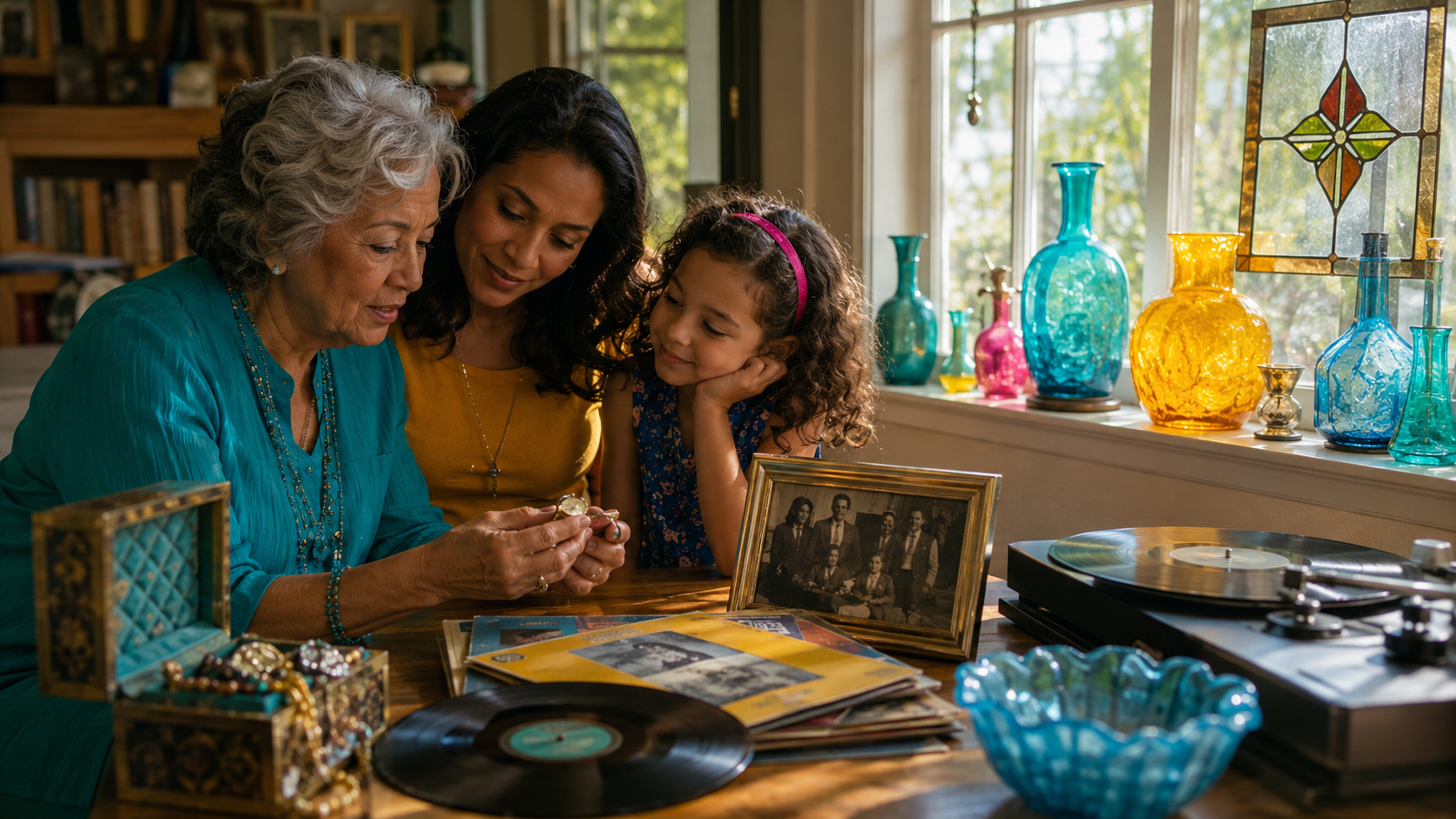
Collections often begin quietly.
For many people, collections represent a life carefully lived. Colored glass may remind someone of afternoons spent antiquing with a parent, road trips to small towns, or the pleasure of finding one rare piece that completed a set. Record collections may hold the soundtrack of youth, courtship, parenthood, or long evenings spent with friends. Heirlooms may connect a person to grandparents, family traditions, military service, immigration stories, craftsmanship, faith, celebrations, or loss. These collections become visible biographies. They show what someone valued, where they traveled, what they loved, and who they wanted to remember.
That is why downsizing can be so difficult. When life changes require a move to a smaller home, retirement community, assisted living apartment, or a family member’s house, the decision is rarely just about space. It is about emotion. A person may know logically that there is no room for twelve boxes of records, three cabinets of glassware, or every piece of furniture inherited from relatives. Still, letting go can feel like erasing a chapter of life. Even when a collection has not been used in years, it may still feel deeply personal.
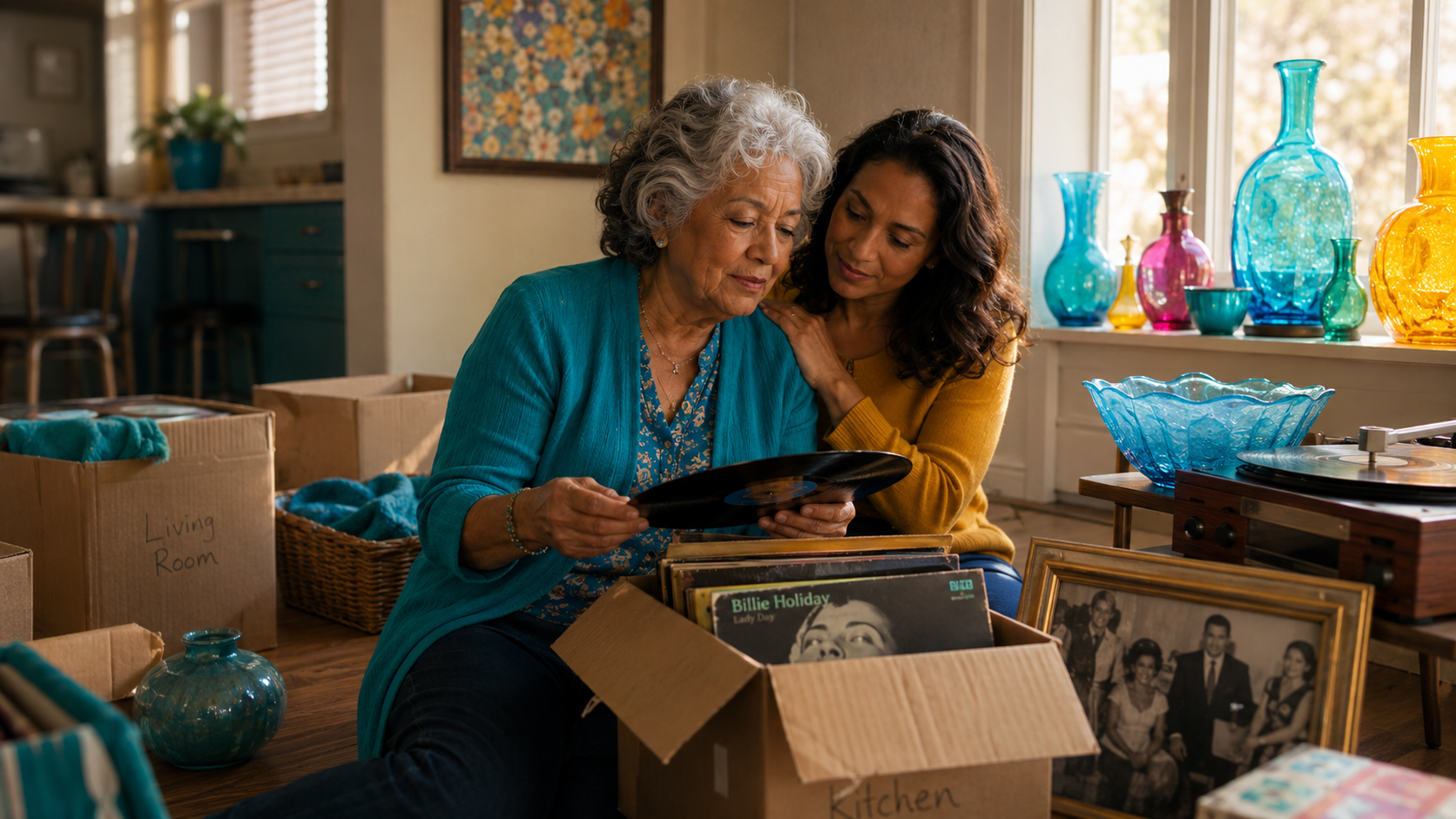
Letting go can feel like erasing a chapter of life.
Transitions often force decisions before a person feels ready to make them. A move may come after the death of a spouse, a change in health, the sale of a longtime home, or the realization that maintaining a larger household has become too much. In these moments, collections can become overwhelming because they represent both love and responsibility. People may worry that if they let something go, they are dishonoring the person who gave it to them. They may also fear that younger family members do not understand the collection’s meaning. The question becomes not simply, “What do I keep?” but “How do I preserve what mattered?”
One helpful approach is to separate the memory from the quantity. A person does not always need to keep an entire collection in order to honor it. A carefully chosen group of favorite pieces can carry the story forward. For example, instead of keeping every piece of colored glass, someone might select one vase, one bowl, and one piece that belonged to a parent or grandparent. These pieces can be displayed where they can still be enjoyed, rather than packed away in boxes. A record collector might keep the albums that represent major life moments: a wedding song, a first concert, a favorite artist, or records connected to family memories. The goal is not to diminish the collection, but to preserve its heart.
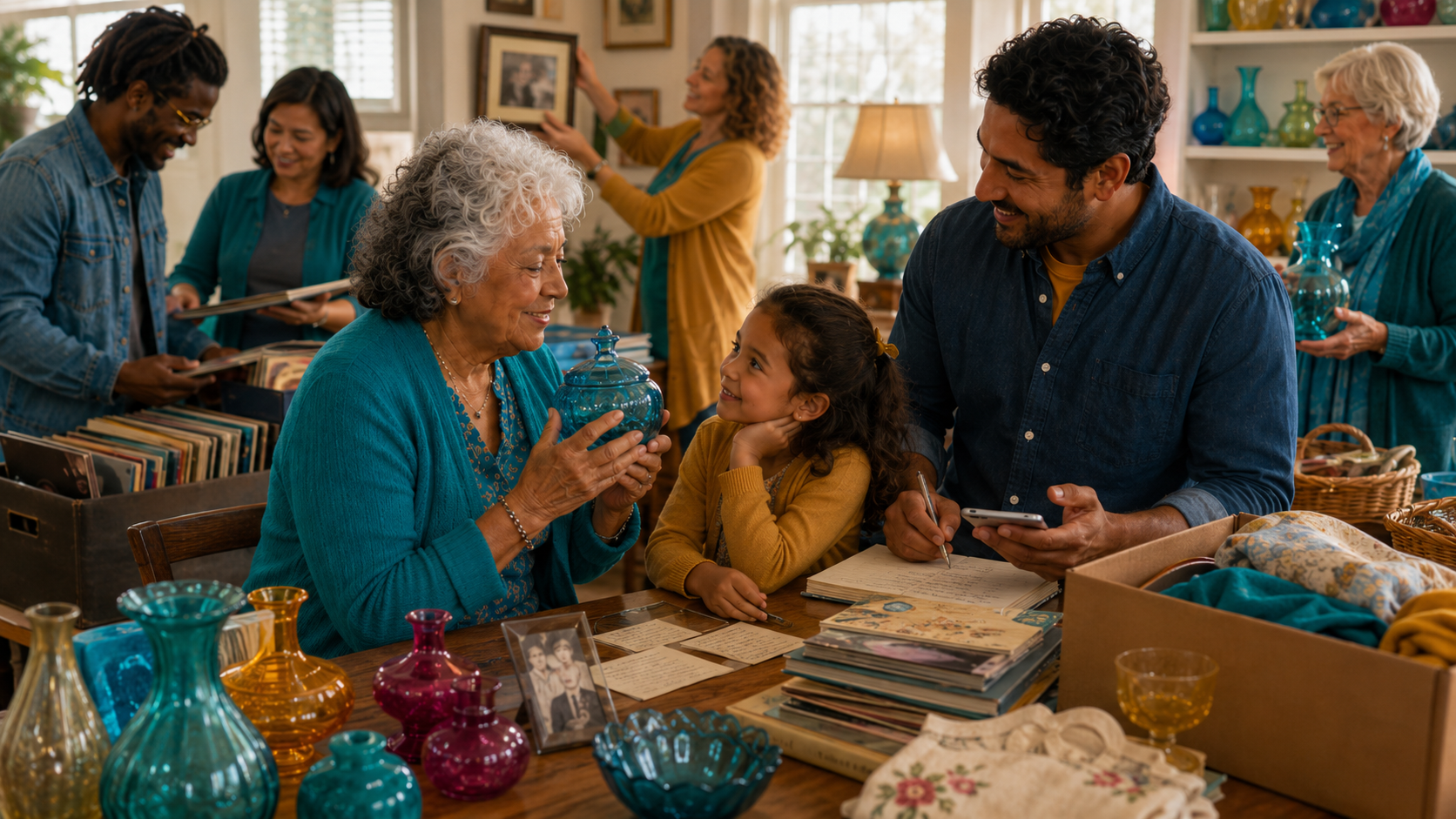
The goal is not to diminish the collection, but to preserve its heart.
Another meaningful step is documenting the story behind the collection. Before items are donated, gifted, or sold, photographs can be taken. Notes can be written. A simple memory card can be attached to an heirloom explaining who owned it, where it came from, and why it mattered. A digital album can preserve images of a collection without requiring physical storage. For families, these records can become as valuable as the objects themselves because they explain the human story behind the items.
When collections need new homes, there are many thoughtful possibilities. Family members are often the first place to begin, but it helps to offer specific items rather than expecting relatives to take everything. A granddaughter may not want a full china cabinet, but she may treasure one candy dish that sat on her grandmother’s table. A son may not have room for hundreds of records, but he may value the albums his father played most often. Giving smaller, meaningful pieces allows family members to accept heirlooms without feeling burdened.
Local historical societies, museums, libraries, schools, theaters, community centers, and veterans’ organizations may also be appropriate homes for certain collections. A record collection connected to a local musician, radio station, or era of community life may interest a historical society or library archive. Family documents, uniforms, photographs, or military memorabilia may be meaningful to a local history museum or veterans’ group. Antique household items, tools, clothing, quilts, or glassware may support educational displays. These placements allow objects to continue teaching, inspiring, and connecting people to the past.

Letting go can become an act of generosity.
Some collections may also find new life through charitable resale shops, church rummage sales, art programs, senior centers, or community fundraisers. Colored glass, dishes, linens, books, records, and decorative items can bring joy to new owners while supporting a cause. Artists and crafters may repurpose certain materials into new creations. Music lovers, vintage collectors, young families, and decorators often appreciate items that others no longer have room to keep. In this way, letting go can become an act of generosity.
Selling a collection can also be appropriate, especially when items have financial value or when proceeds are needed to support a move or future care. Antique dealers, estate sale companies, auction houses, record shops, and online marketplaces may help collections reach people who understand their worth. However, selling works best when there is time to research value and make informed decisions. During stressful transitions, professional guidance can help families avoid rushed choices.
The most important thing is to treat collections with respect. Downsizing should not be framed as “getting rid of junk” when the objects represent someone’s life. A better question is, “Where can this be appreciated next?” That question changes the tone of the process. It allows people to move from loss toward legacy.
Collections matter because people matter. They hold memories, relationships, accomplishments, and personal taste. During life transitions, it is natural to grieve the need to let some of them go. But when collections are thoughtfully sorted, documented, shared, donated, sold, or displayed in new ways, they do not simply disappear. They continue their story elsewhere.
Downsizing does not have to mean forgetting. With care, patience, and intention, beloved collections can be honored while also creating room for the next stage of life.

When collections are thoughtfully sorted, documented, shared, donated, sold, or displayed in new ways, they do not simply disappear. They continue their story elsewhere..