Breaking the Cycle of Procrastination: Moving Forward with Decluttering and Organization
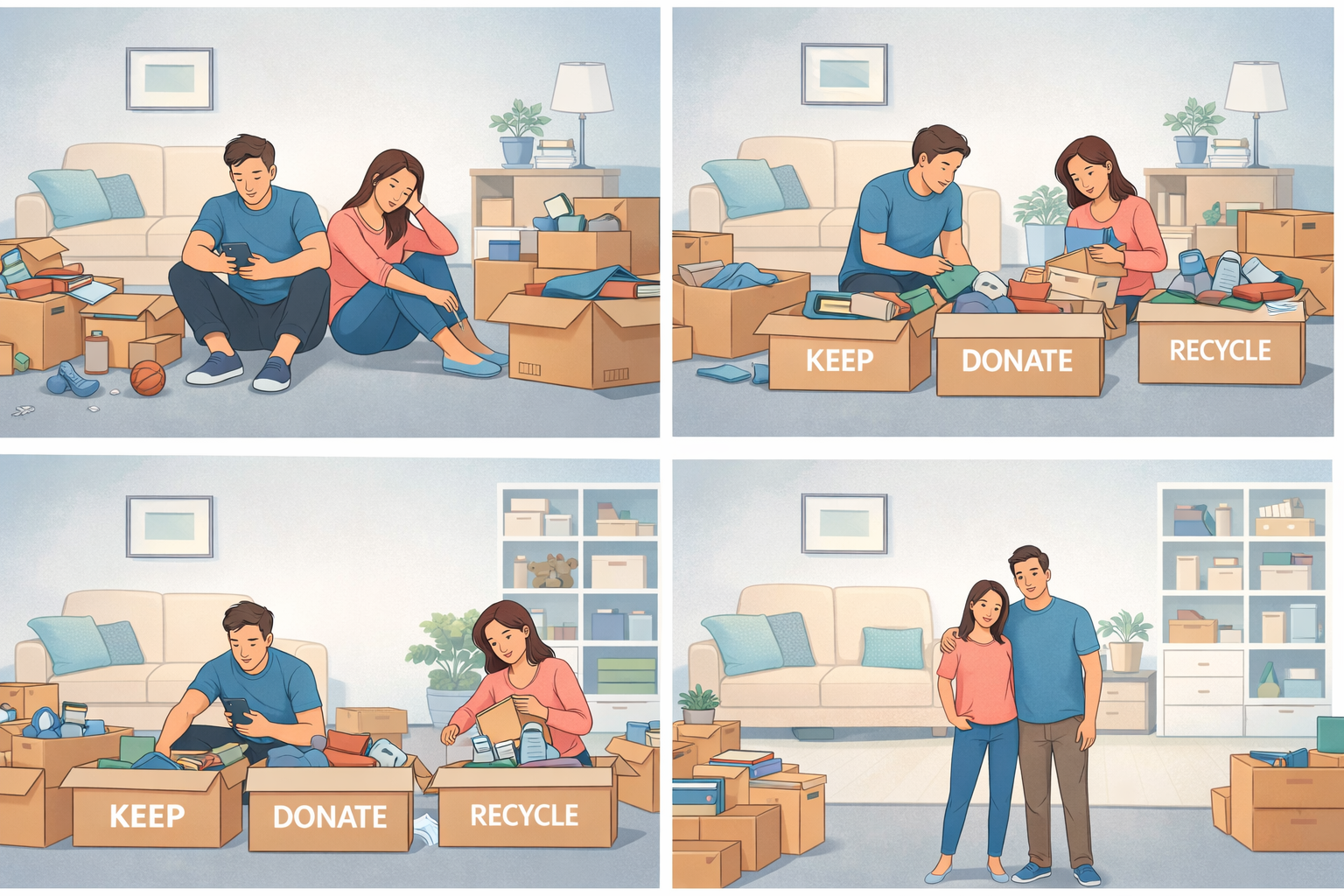
Procrastination is one of the most common obstacles people face when trying to declutter or organize a home or office. Many individuals recognize that their space would function better if it were more organized, yet the process of beginning often feels overwhelming. The intention to declutter is frequently postponed with the belief that a better time will eventually present itself. Days turn into weeks, and weeks turn into months, while the clutter remains unchanged. Understanding why procrastination occurs and learning practical strategies to move past it can transform the organizing process from a daunting task into a manageable and productive experience.
Why do people procrastinate?
One of the primary reasons people procrastinate when decluttering is the perception that the task must be completed all at once. When individuals look at a crowded garage, an overfilled closet, or stacks of paperwork on a desk, the sheer volume of items can trigger a sense of mental overload. The brain interprets the task as too large to handle in a single effort, which can lead to avoidance. Instead of beginning with small actions, many people delay the process entirely because they believe they need an entire day or weekend to make meaningful progress.
Another factor that contributes to procrastination is decision fatigue. Decluttering requires repeated choices about what to keep, donate, recycle, or discard. Each decision demands mental energy. When people anticipate having to make hundreds of decisions about possessions, they may avoid starting because the process appears mentally exhausting. This is especially true for sentimental items or objects associated with past experiences, which can complicate the decision-making process.
Emotional attachment also plays a significant role in procrastination. Possessions often carry memories, aspirations, or a sense of identity. Items may represent hobbies that were once important, gifts from loved ones, or reminders of past accomplishments. Letting go of these objects can feel like letting go of a part of one’s personal story. As a result, individuals postpone the organizing process to avoid confronting these emotions.

In workspaces and home offices, procrastination can stem from the constant demands of daily responsibilities. Emails, meetings, and deadlines compete for attention, making organizational tasks seem less urgent. Paperwork accumulates on desks and digital files grow increasingly disorganized because immediate work tasks appear more pressing. Over time, the clutter can begin to interfere with productivity, yet the organizing process continues to be delayed.
How can the procrastination cycle be broken?
Breaking the cycle of procrastination begins with reframing the way decluttering is approached. Rather than viewing organization as a single large project, it is more effective to see it as a series of small, manageable actions. Progress does not require an entire weekend of uninterrupted effort. In many cases, meaningful improvements can occur in short periods of focused time.
One effective strategy is to adopt a “micro-task” approach. Instead of attempting to organize an entire room, focus on one specific area such as a single drawer, shelf, or file folder. Completing a small task provides a sense of accomplishment that encourages continued progress. Over time, these small steps accumulate into substantial improvements. For example, spending fifteen minutes each day sorting through a stack of paperwork can eventually eliminate a large backlog of documents.
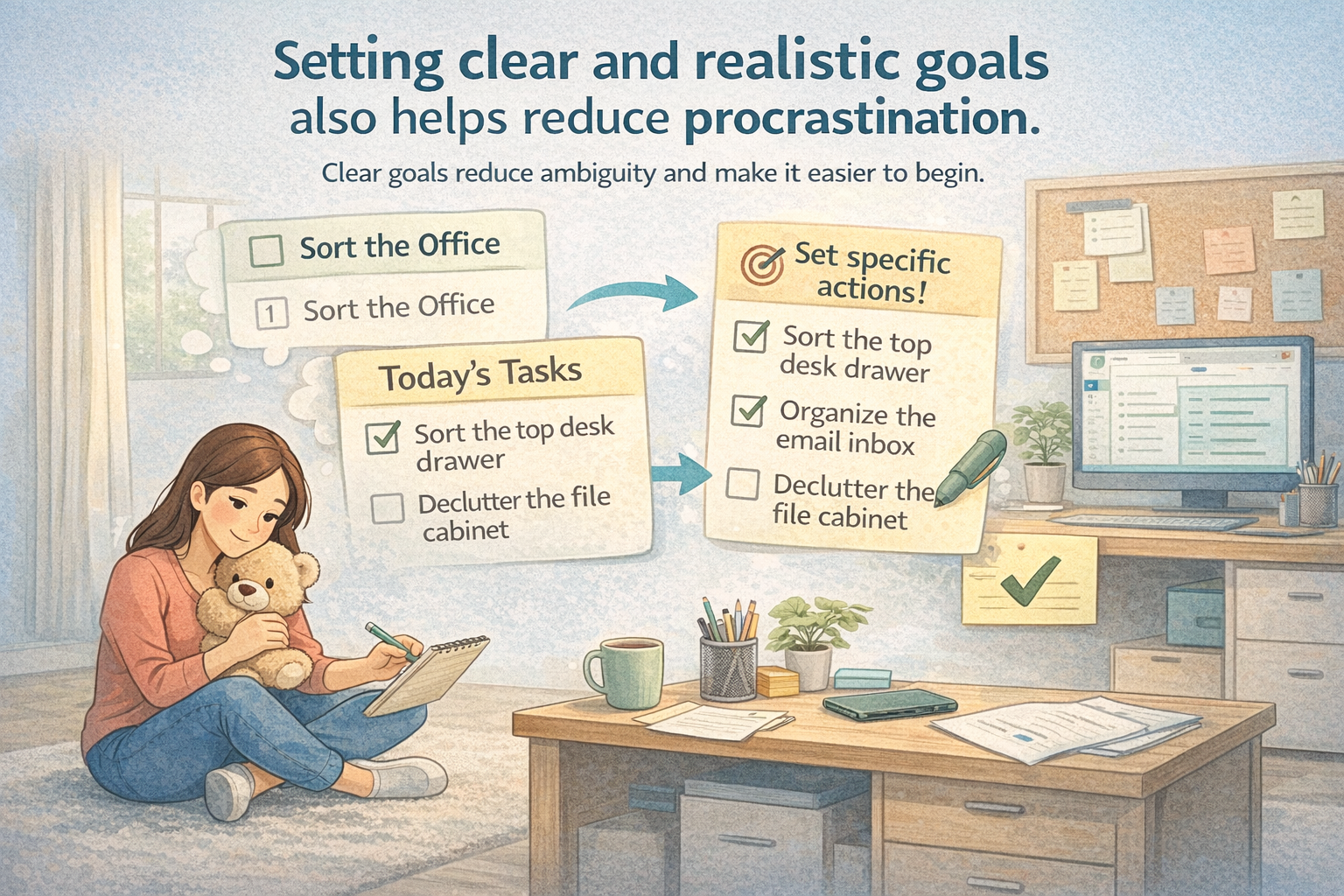
Setting clear and realistic goals also helps reduce procrastination. Vague intentions such as “I need to organize the office” can feel overwhelming. A more effective approach is to define specific actions, such as “sort the top desk drawer” or “organize the email inbox.” Clear goals reduce ambiguity and make it easier to begin.
Another useful method is to establish a consistent routine for decluttering activities. Scheduling short organizing sessions during the week helps integrate the process into daily life. For instance, dedicating twenty minutes at the end of the workday to clearing a desk or organizing digital files can prevent clutter from accumulating. Regular routines transform organization from an occasional project into an ongoing habit.
Time limits can also improve motivation. Many individuals find it helpful to set a timer for a brief session, such as twenty or thirty minutes. Knowing that the task has a defined endpoint makes it easier to start. Once the timer begins, the focus shifts to completing as much as possible within the allotted time. Often, individuals discover that they continue working even after the timer ends because the initial barrier to starting has been removed.
What are the benefits of breaking the procrastination cycle?
Creating structured sorting categories simplifies the decision-making process and reduces mental fatigue. Common categories include keep, donate, recycle, and discard. When these categories are clearly defined, each item can be quickly assigned to its appropriate group. This structured approach eliminates the need to repeatedly reconsider the same decisions.
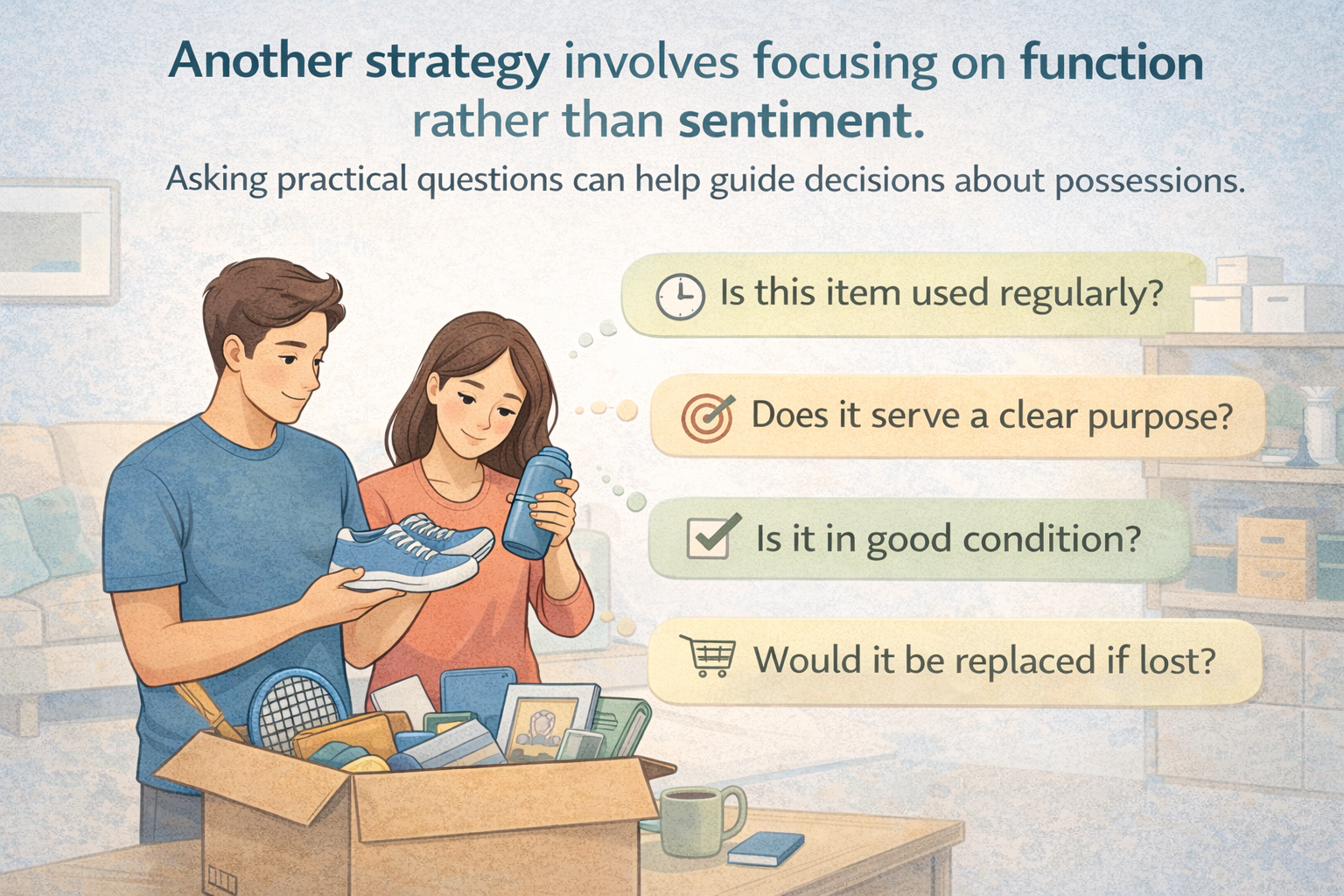
Another strategy involves focusing on function rather than sentiment. Asking practical questions can help guide decisions about possessions. For example: Is this item used regularly? Does it serve a clear purpose? Is it in good condition? Would it be replaced if it were lost? These types of questions shift the focus toward usefulness and practicality, which can make decision-making easier.
Visualizing the benefits of an organized environment can also motivate action. Organized spaces often support improved focus, reduced stress, and greater efficiency. When work surfaces are clear and storage systems are functional, individuals spend less time searching for items and more time completing meaningful tasks. In home environments, organized spaces can create a greater sense of calm and control, contributing to overall well-being.
How can better habits be sustained?
Accountability is another powerful tool for overcoming procrastination. Working with a friend, family member, or professional organizer can provide structure and encouragement. Having someone else present during the process can make the task feel less isolating and more productive. Additionally, accountability partners can help maintain focus and prevent distractions.
Technology can also support organizational efforts. Digital calendars, task management tools, and reminder systems can help individuals schedule and track decluttering activities. For office environments, digital file management systems can replace large quantities of paper documents, reducing physical clutter while improving accessibility.
Finally, it is important to recognize that decluttering is not about achieving perfection. Many individuals delay organizing because they believe the final result must be flawless. In reality, organization is an evolving process that adapts to changing needs and circumstances. Progress, even if gradual, is far more valuable than waiting indefinitely for the perfect time or method.
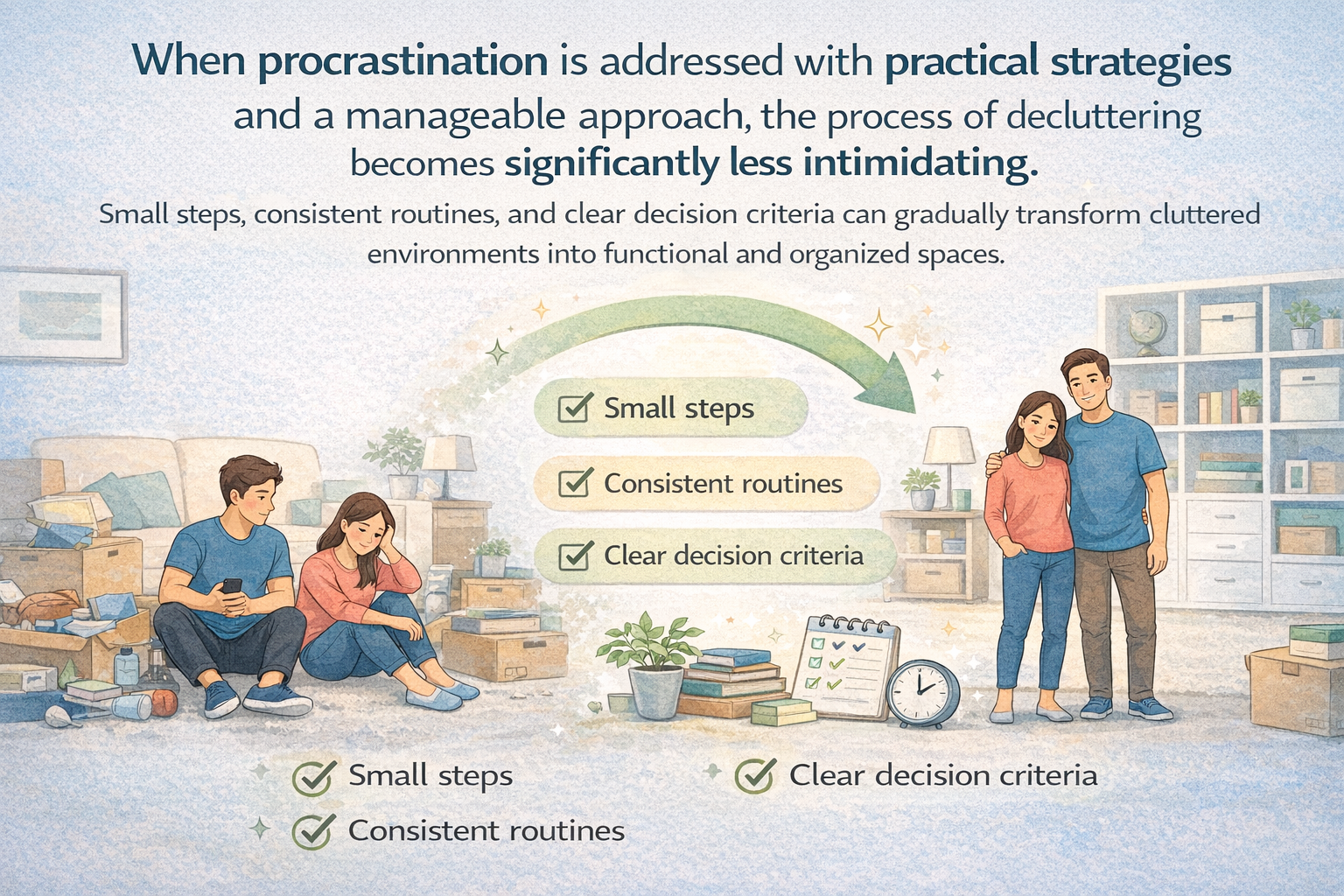
When procrastination is addressed with practical strategies and a manageable approach, the process of decluttering becomes significantly less intimidating. Small steps, consistent routines, and clear decision criteria can gradually transform cluttered environments into functional and organized spaces. Over time, these improvements support productivity, reduce stress, and create environments that better reflect the priorities of the people who use them.
The key to overcoming procrastination is simply beginning. Once the first small step is taken, momentum often follows. Through steady and intentional action, the organizing process becomes less about confronting clutter and more about creating spaces that support clarity, efficiency, and a sense of calm